The Social Security Administration's Office of the Inspector General (SSA OIG) has issued a public warning about a rapidly increasing scam method involving QR codes and barcodes. This deceptive scheme aims to steal money from victims, replacing traditional demands for cash or wire transfers with these digital payment methods.
The scam typically begins with an unexpected phone call or text message. The caller often impersonates a law enforcement official, such as a police officer, sheriff's deputy, or federal agent. In these initial contacts, the scammer falsely claims that the victim owes a significant fine or debt. Alternatively, they might allege that a family member, frequently an adult child, has been arrested and requires immediate bail money. A concerning development in these scams is the increasing use of voice cloning technology, which allows scammers to mimic the voice of a loved one, making their deceit more convincing.
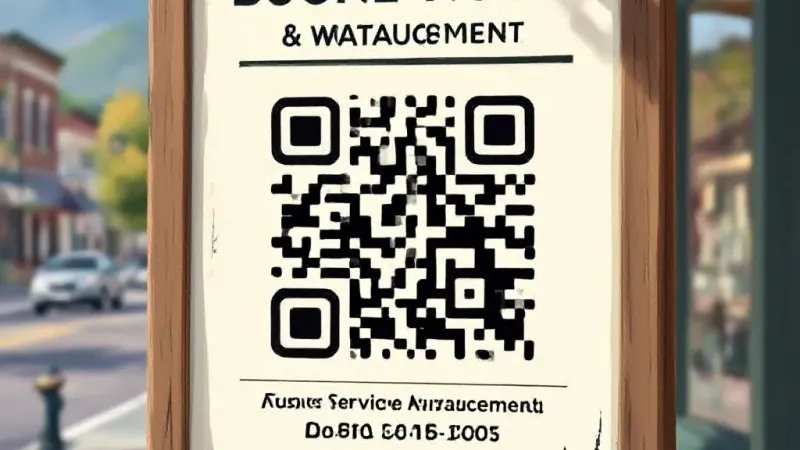
Instead of directing victims to send cash or arrange a wire transfer, the scammer instructs them via text or email to use one or more barcodes or QR codes. The victim is then told to go to a retail store, load money onto each specified code, and subsequently read the code back to the scammer once the payment is made. This method has proven effective for scammers, with some victims losing thousands of dollars without ever disclosing personal details like their Social Security number. The SSA OIG emphasizes that, in these cases, "the barcode itself is the scam."
The SSA OIG unequivocally states that legitimate law enforcement officers will never demand immediate payment through the use of barcodes or QR codes. This warning also extends to the Social Security Administration, its Office of the Inspector General, and any other government agency. Officials advise that if anyone receives a directive to load money onto a barcode or QR code at a retail store, they should immediately hang up the phone or disregard the message, as it is a fraudulent attempt.
Officials also recommend a crucial pause before taking any action. Scammers intentionally create a sense of urgency to prevent victims from having time to think critically or consult with others. Furthermore, individuals should never trust a call transfer if they are unsure of the caller's legitimacy. The recommended protocol is to hang up the phone and directly call the agency in question, using a verified phone number obtained from its official website.
Anyone who encounters a scam attempt involving a barcode or QR code, particularly if the caller claims to be from the Social Security Administration, is strongly encouraged to report the incident. Reports can be filed with the SSA OIG directly through its website at ssa.gov/scam or by contacting the SSA OIG Fraud Hotline at 1-800-269-0271. Additionally, the Federal Trade Commission also accepts reports of such fraud at reportfraud.ftc.gov.