
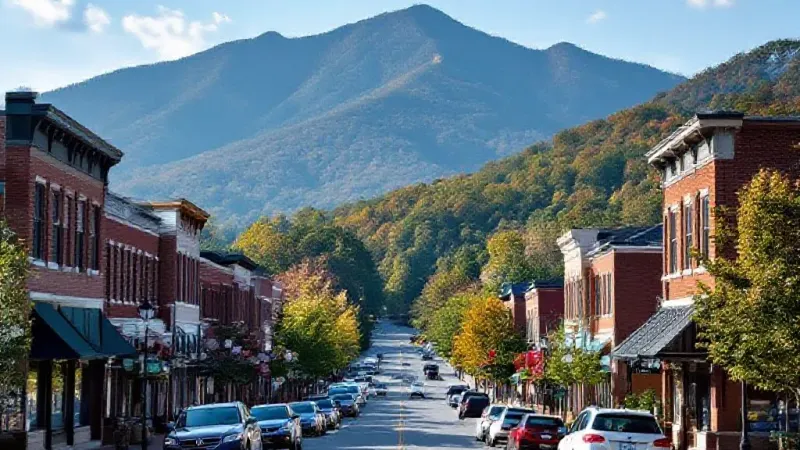
Two local organizations, Q’Pasa Appalachia and the Immigrant Justice Coalition (IJC), are actively working to provide resources and build stronger community ties for Boone’s Hispanic and Latino residents. These groups aim to educate and connect community members, striving to remove obstacles that can challenge immigrant neighbors.
Q’Pasa Appalachia, cofounded in 2020 by Yolanda Adams and Iris Straube, became a crucial resource, particularly during the global pandemic. Adams stated that a significant need arose for information sharing, not just about the educational system but for the community at large. She observed that numerous local businesses and organizations were eager to assist the Hispanic and Latino community but lacked a direct link. Adams noted that Q’Pasa Appalachia became "that bridge" between the Hispanic and Latino community and the broader community, helping them to come together.
Adams, a former board member of the Boone Area Chamber of Commerce, highlighted the Chamber's impactful aid in bridging gaps between communities. A significant initiative involved building trust between the Hispanic and Latino community and local law enforcement, which Adams described as "very rare to find in other communities." This trust-building was fostered through regular meetings called “café con leche.” During these gatherings, participants discussed various Boone rules and regulations, their underlying reasons, and updates regarding immigration. Adams emphasized that while complete agreement on every topic is not always necessary, open conversation often reveals common ground, which proved true in their interactions with law enforcement. These meetings gradually became a regular occurrence as community members grew more comfortable and engaged.
Sarah Donovan, a board member for IJC, explained that the organization works to bridge the gap between lifestyles in Boone, aiming to educate people and create community. The IJC has also focused on ensuring the protection of Boone’s Hispanic and Latino community, including educating residents on Immigration and Customs Enforcement (ICE) policies. Donovan stated that IJC representatives have met with the sheriff’s office on several occasions to discuss potential legislation that might require local law enforcement, including sheriffs, to cooperate more closely with ICE. She described these conversations with the sheriff as "really helpful and really insightful."
Recent legislative changes have impacted these local efforts. The North Carolina Border Protection Act passed in June, after House Republicans overrode Gov. Josh Stein’s veto. This law now requires both the Watauga County Sheriff and the Boone Police Department to cooperate with ICE, granting immigration officials increased power and authority in the High Country. Donovan reported an "uptick in people being arrested and detained" and having ICE pick them up from the local jail in Watauga County due to this legislation. She stressed the importance of community awareness regarding how federal and state policies can trickle down and affect local families.
Despite a polarizing political climate and increasingly stringent immigration standards, Adams observed the continued high engagement at these community meetings, with over 100 people consistently attending to learn from each other about various local rules and regulations. Adams characterized this strong community involvement as "the exception," reflecting a strong desire among residents to be involved. She also highlighted the support from Boone’s law enforcement, who reassure Hispanic and Latino community members that they belong and will receive service just like any other community member. Donovan further noted the strong community support, with non-immigrant residents actively working to make immigrants and those affected by immigration feel welcome, at home, and safe in Boone.